Process2018produced

DRAWING PROCESS

The drawings go on the floor, because that is where you find out what you have
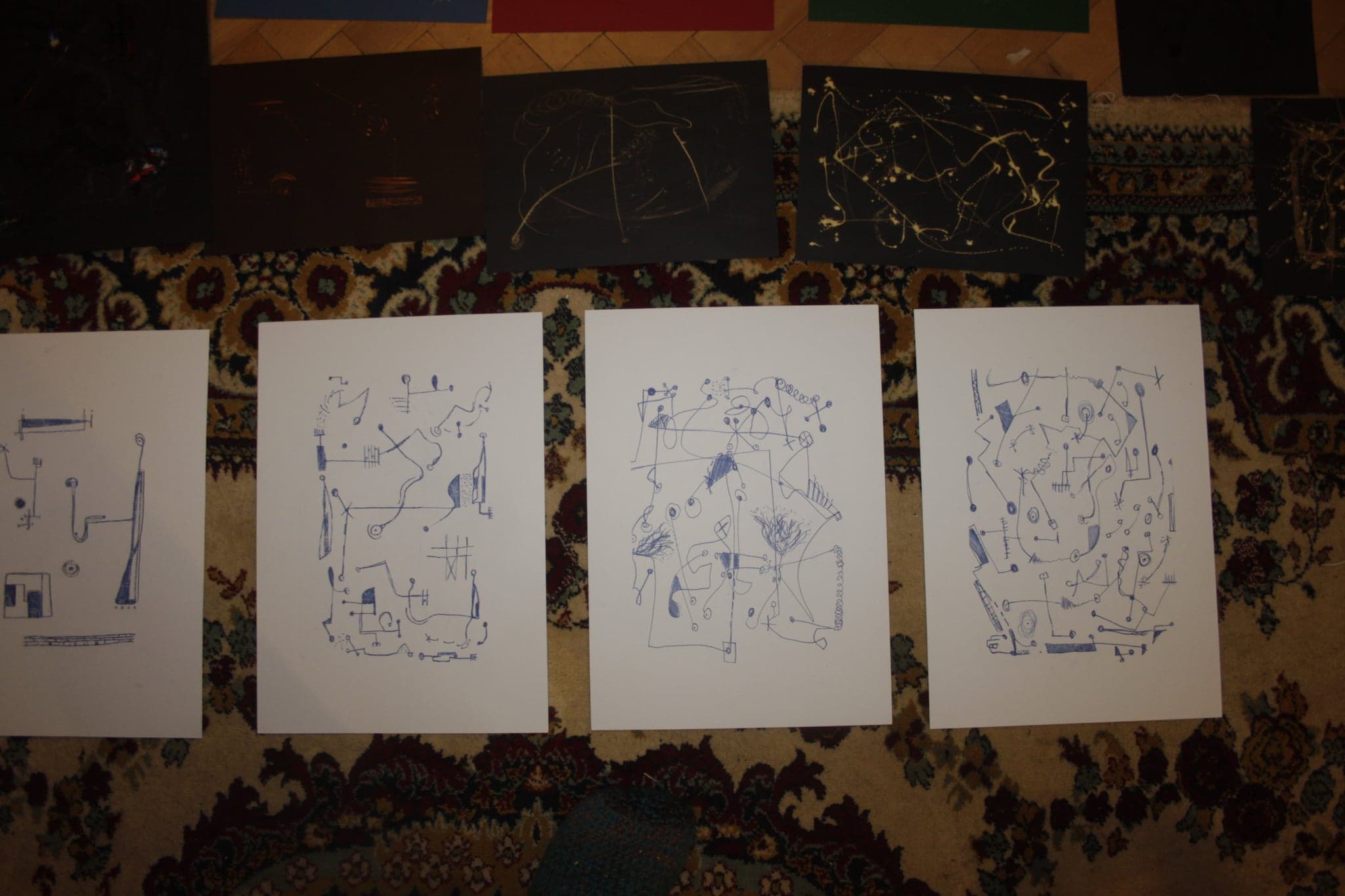
Works laid out on a patterned carpet: a row of dark and coloured sheets along the top, four white sheets with blue ink drawings below them
Black sheets marked in gold arranged along the top of a carpet with four blue ink drawings on white paper laid out beneath them
Gold on black above, ink on white below, seeing whether they belong together.
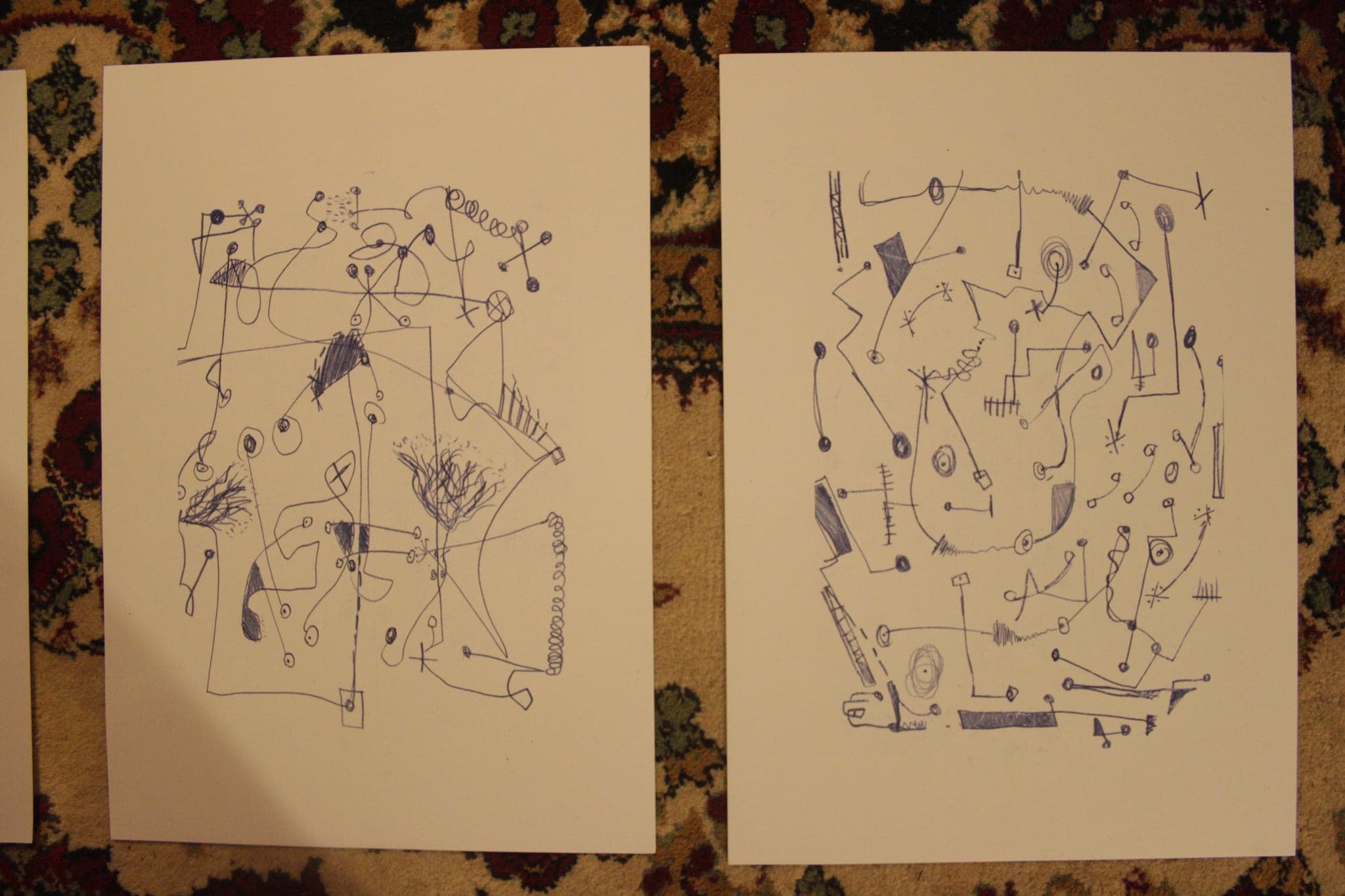
Two large sheets of cream paper side by side, each covered in a continuous blue ink line drawing with small filled shapes
Close in on two of them. The line does not lift.

Drawing does not end at the last mark. The sheets come off the table one at a time and go down on the floor, and only then is there anything to judge. A drawing on its own is a drawing. Twenty of them lying in rows is a body of work, or it is not, and the floor is what tells you which.
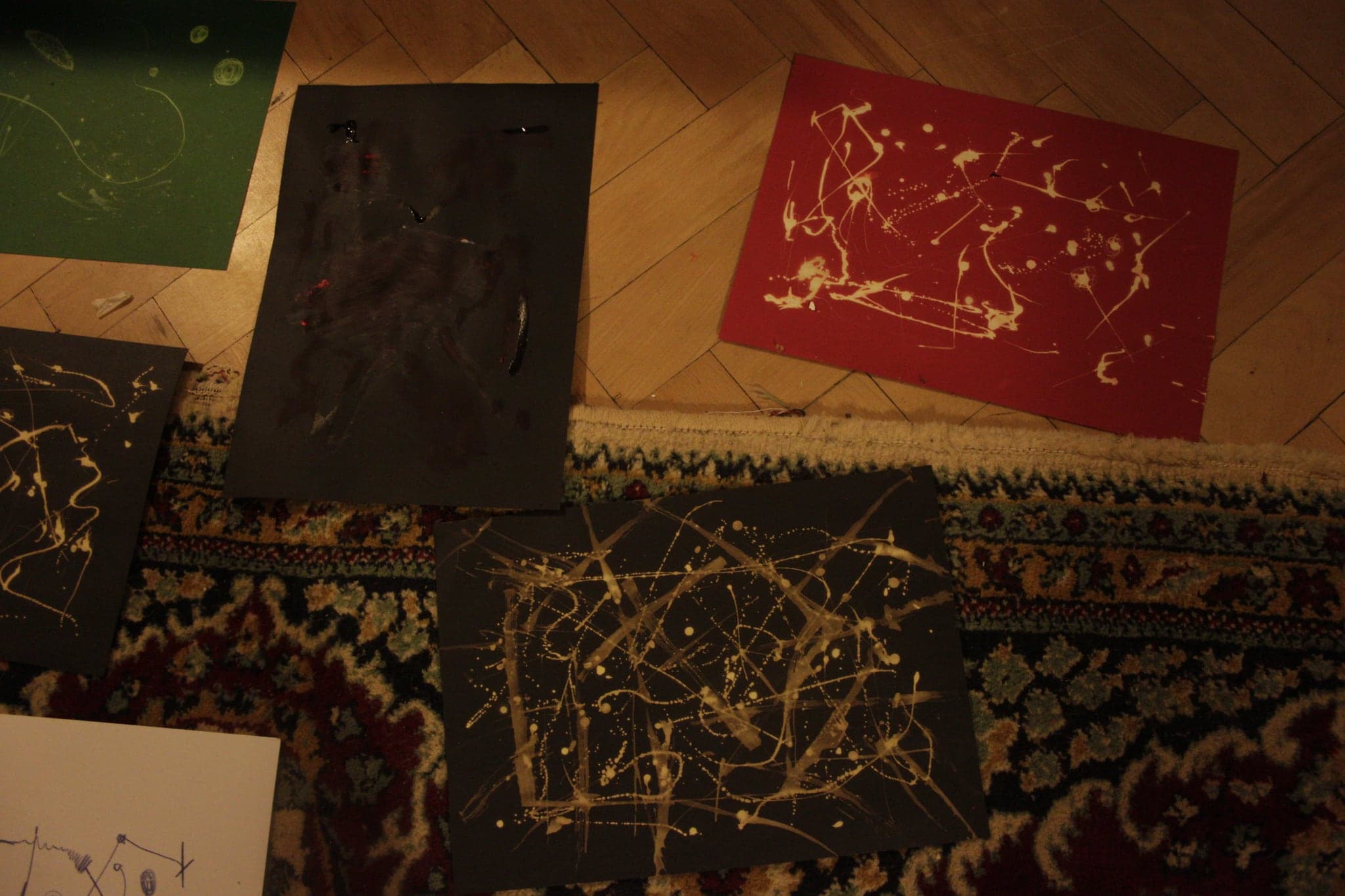
Green and red card and a dark sheet on parquet, each carrying pale scattered marks where chlorine has taken the colour out
The chlorine sheets. The mark is where the colour has gone.
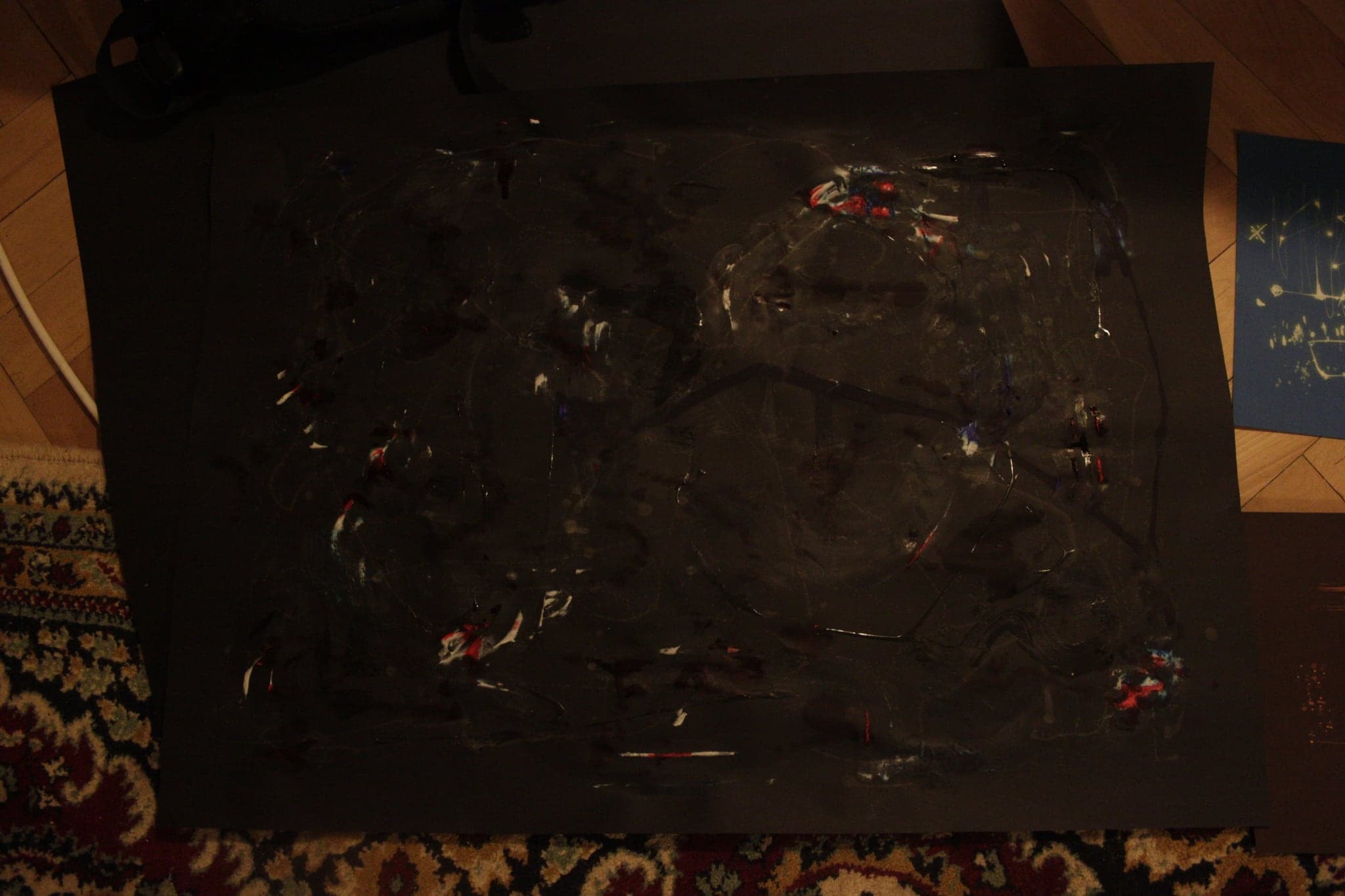
A large black sheet lying on the floor, its surface thick and tarry with small bright flecks caught in it
The largest one, and the only one that is a surface rather than a line.

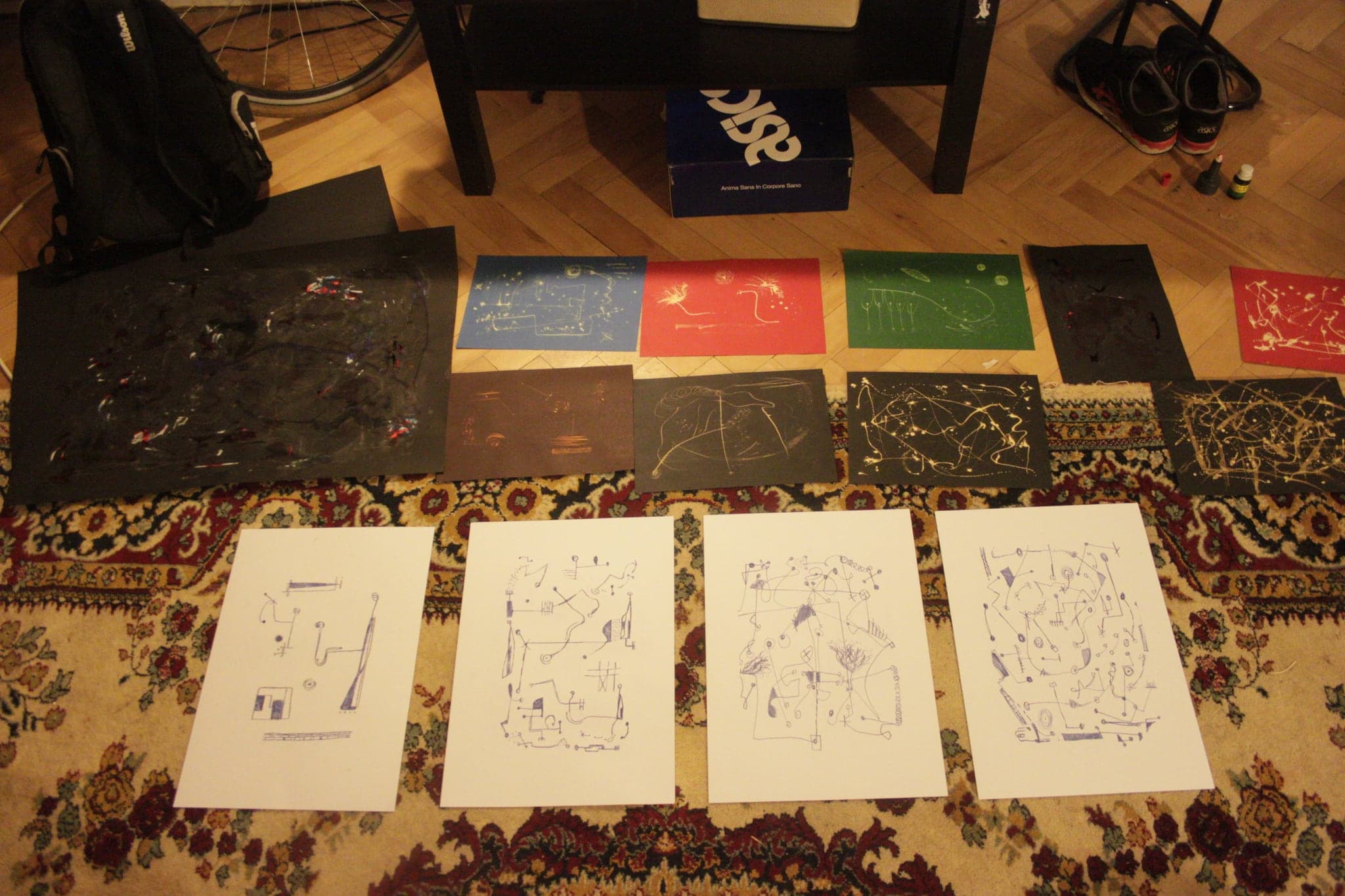
So the floor gets used as the working surface it is. A patterned carpet in one room, bare parquet in the next, whatever is large enough to take everything at once. Sheets are set out in rows, stood against each other, moved, shot from above, moved again. The photographs are not of the drawings; they are of the sorting.
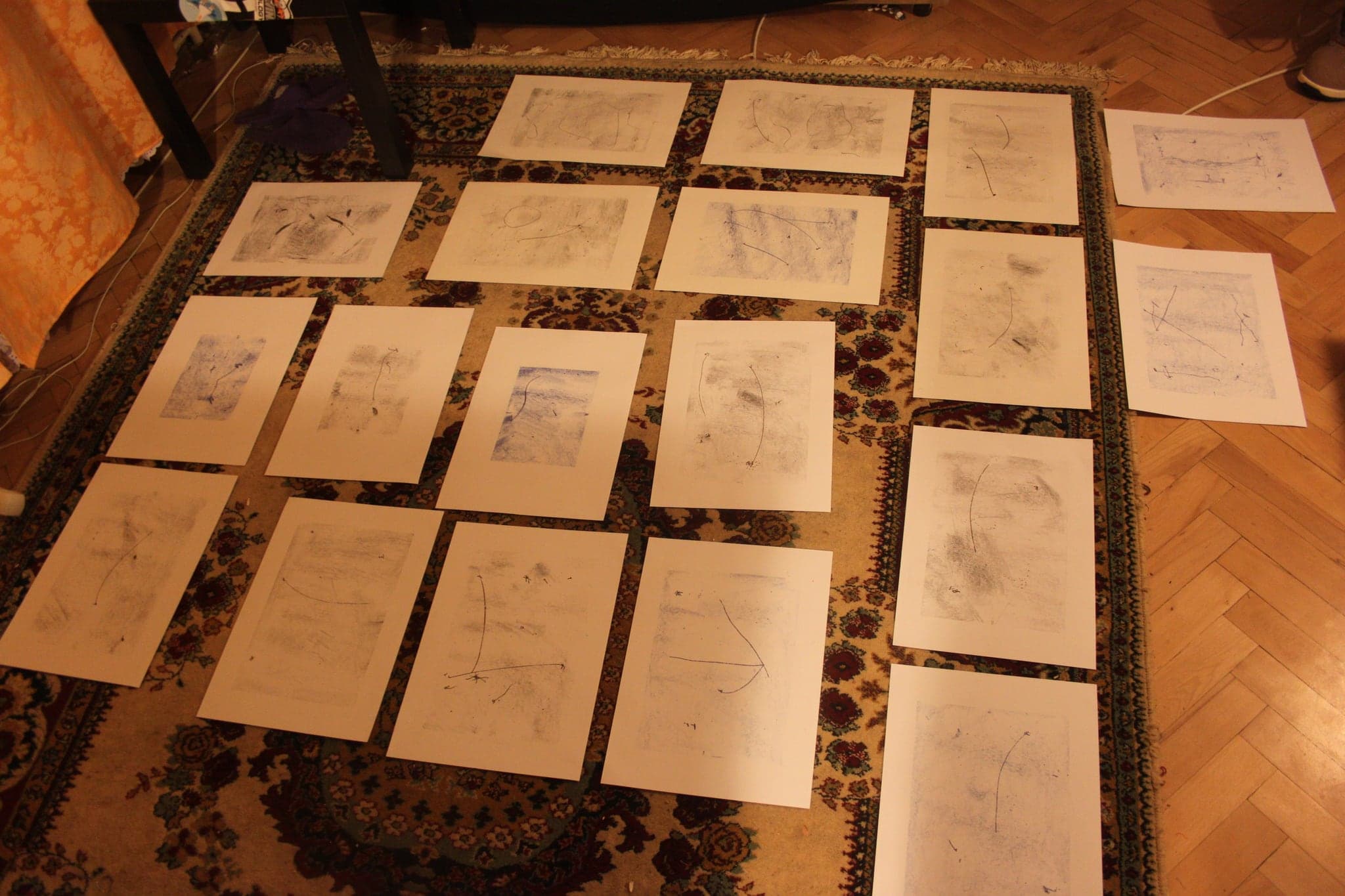
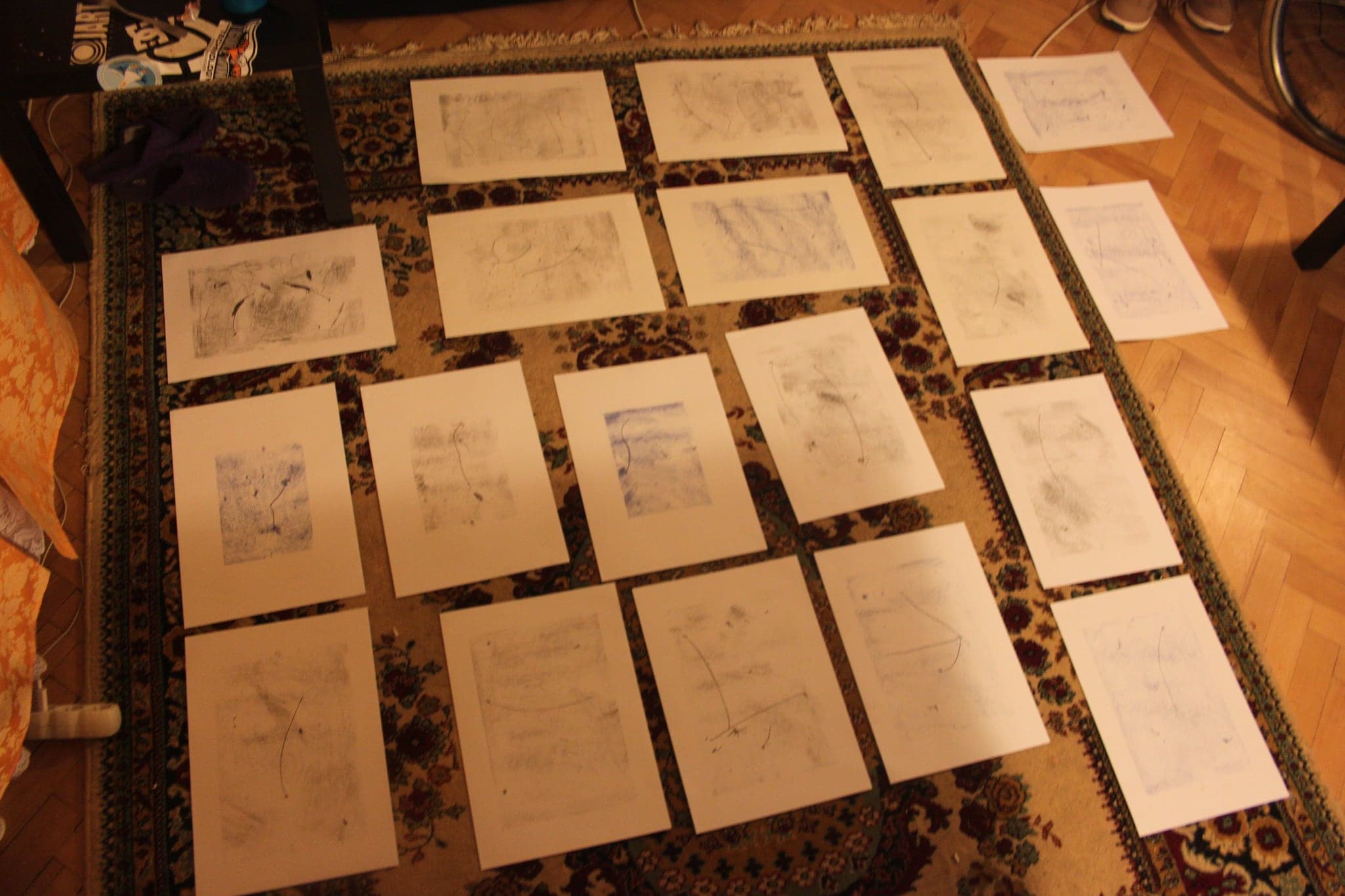
More than twenty pale drawings laid in rows across a carpet and parquet floor under warm lamplight, seen from above
The whole run down at once. This is the point of the exercise.
The same set of drawings rearranged, spread further across the parquet floor and photographed from a different angle
Moved, and looked at again from the other side.

What is down there is everything from the same months: pen and ink lines that run without stopping, graphite that is rubbed rather than drawn, chlorine marks that take colour out of red, green and blue card instead of putting any on, and gold on black. Different materials, one hand, and laying them together is the only way to see that.
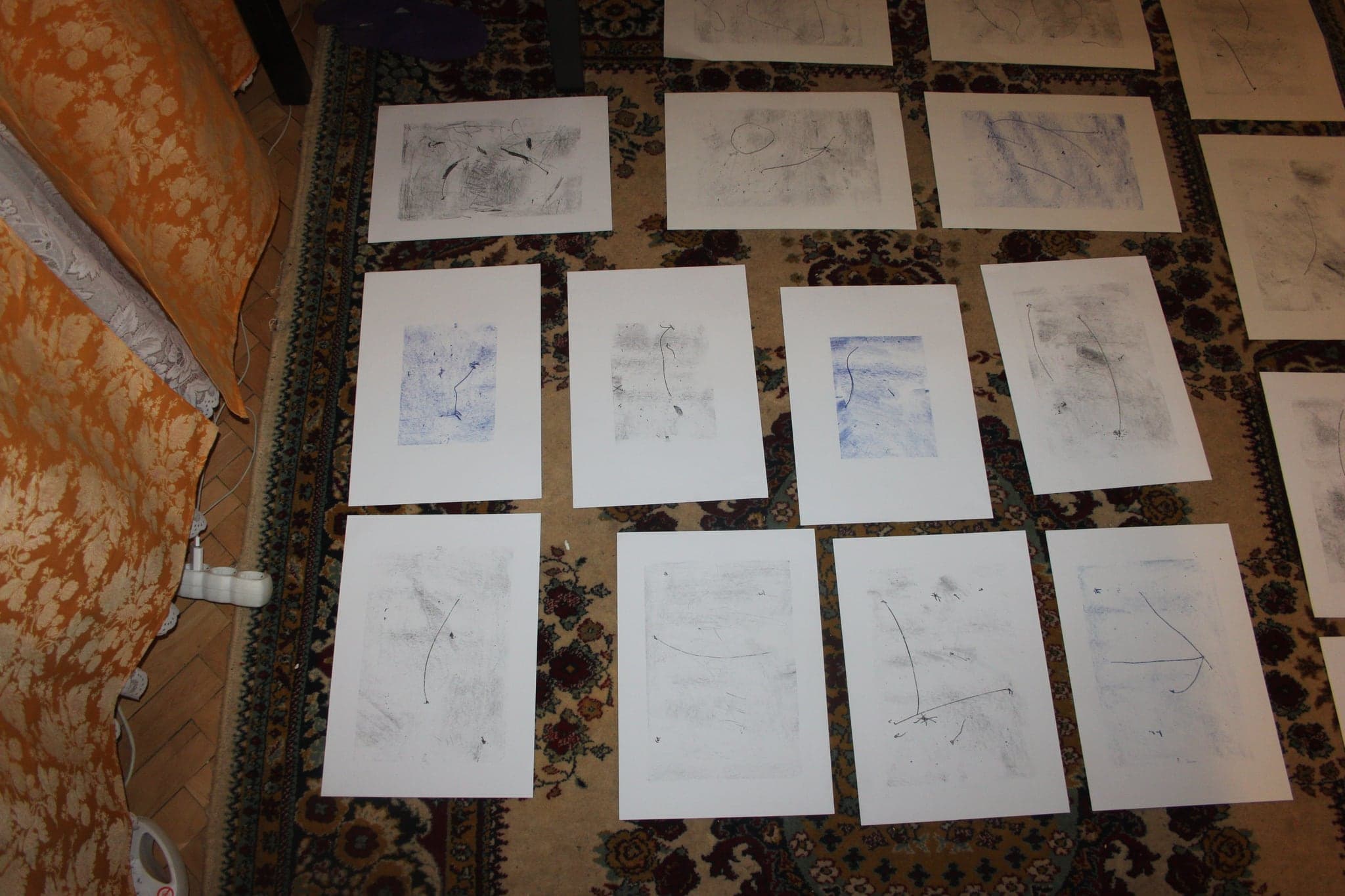
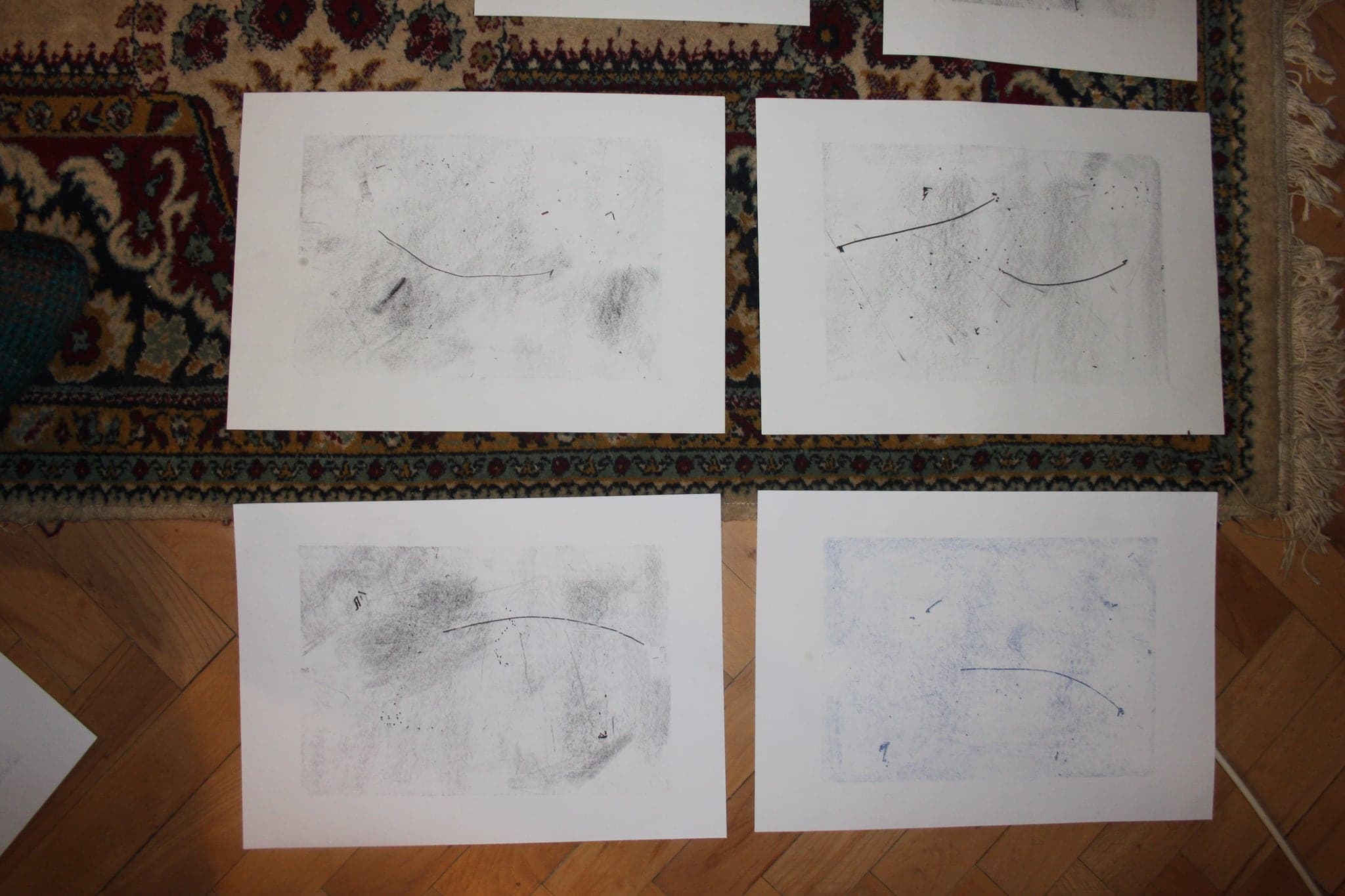
Drawings laid out in rows where four blue ink sheets sit among a larger group of grey graphite drawings
The blue ones put in among the graphite, to see if they hold.
Four large white sheets on a carpet, each with sparse graphite marks, a smudged mass and a single long drawn line
The four largest, given their own space.

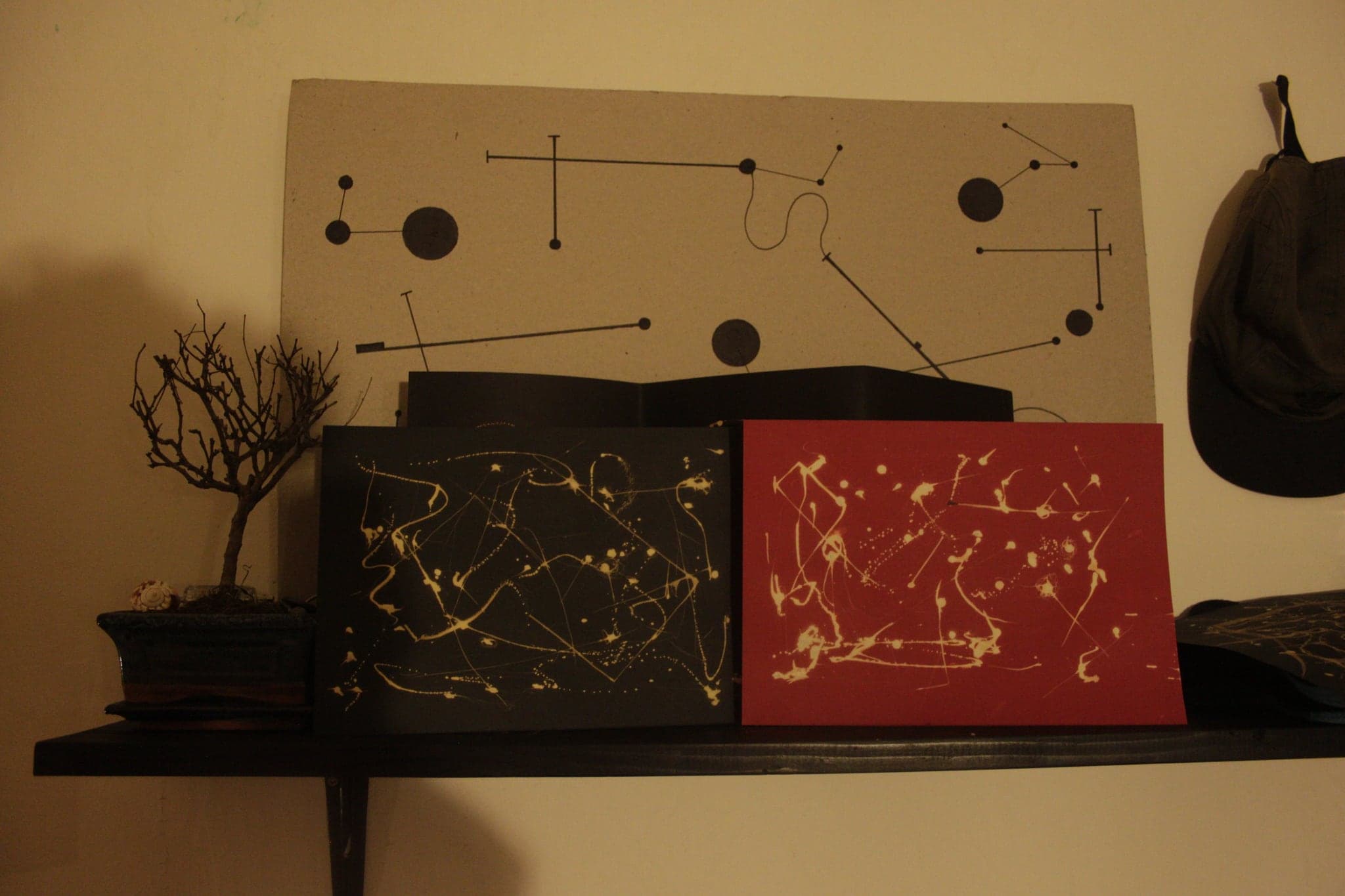
The last stage is vertical. A few of them go up on the shelf against the wall, and once they are up they stop being work in progress.
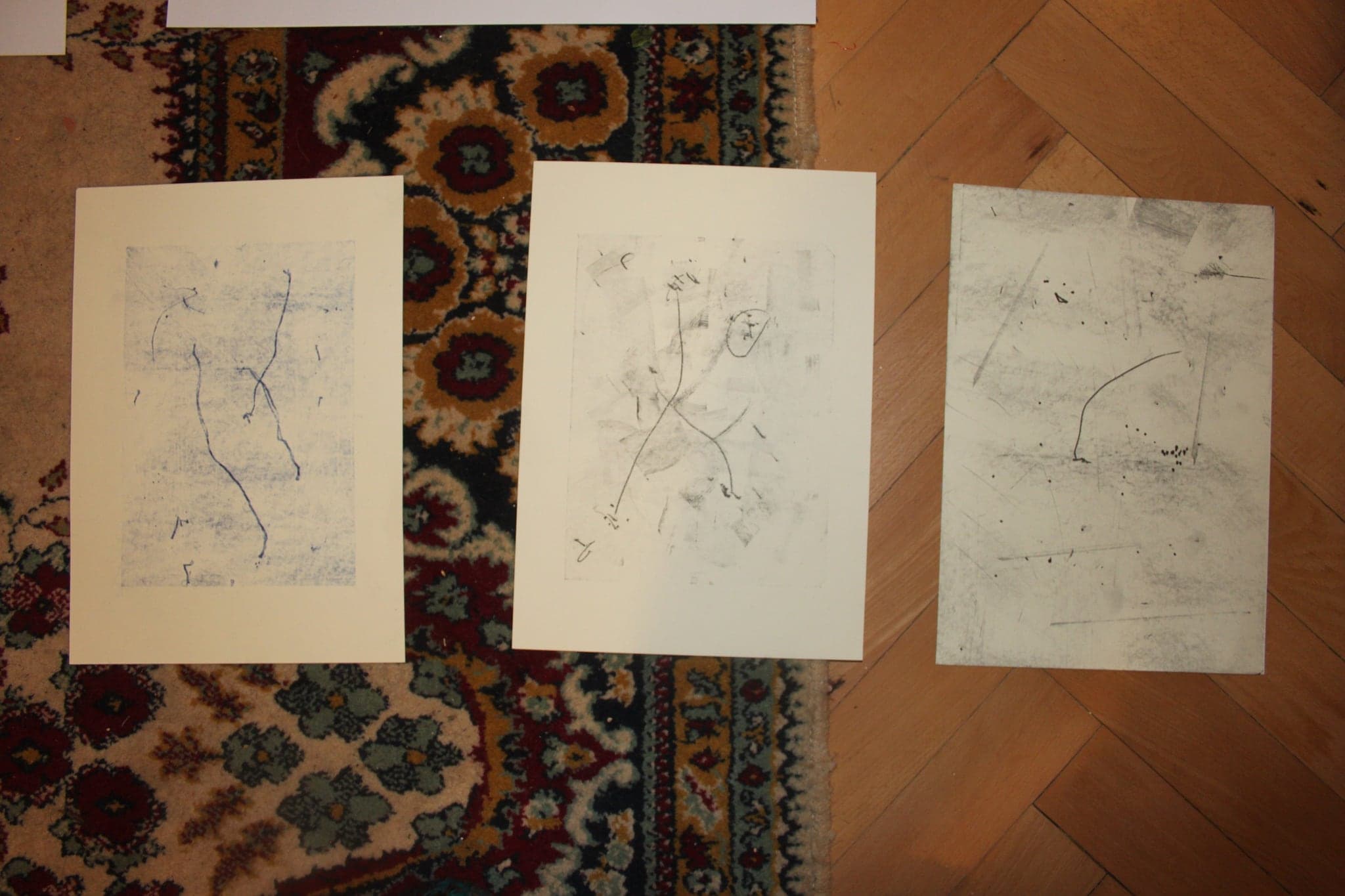
Three large pale drawings laid side by side on a patterned carpet, each with fine graphite lines and small dark forms
Three that were kept together.
A black board marked with dots and connecting lines mounted on a wall, with a gold-marked black sheet and a red sheet standing on the shelf below
Up on the shelf. Once they are vertical they are finished.

The old studio, 2018.

Medium
Ink, graphite and chlorine on paper and card, process
Materials
Ink, Graphite, Sodium hypochlorite, Paper, Coloured card
Role
Artist
← Back to the archive